Copper peptide essays
The skin barrier
An ingredient can perform well in a dish and still present a delivery problem. Here the skin specimen takes center stage.
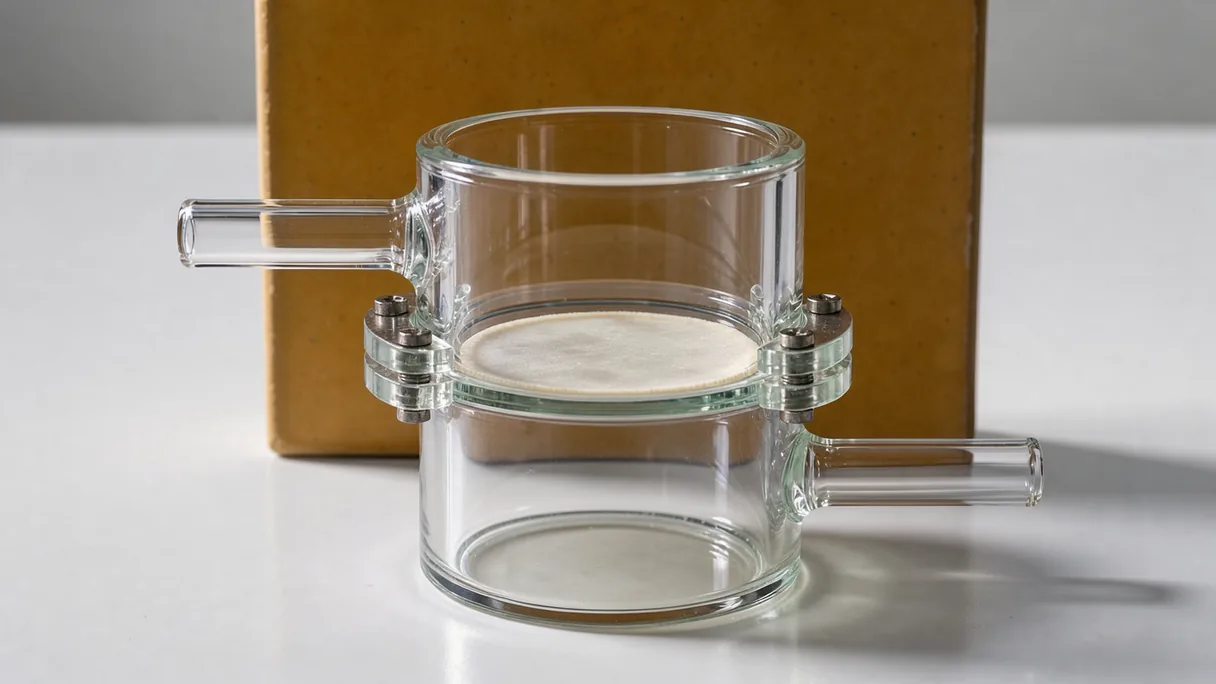
A specimen between compartments
Imagine the practical question before the apparatus: what passes through skin, and what remains in it? In the human skin-layer study, copper was applied as the GHK-Cu tripeptide and measured for permeation and retention. The setting was skin examined outside the body. That is the meaning of ex vivo here; the experiment concerns a specimen rather than the response of a person using a preparation.
Over 48 hours, the study recorded copper passage and a retained dermal depot. I like the physicality of this question. It demands an answer about location, instead of allowing the word “delivery” to stand in for a result.
The named measurement matters just as much as the apparatus. This entry describes copper permeation. Extending it to the amount of intact peptide reaching a target, or to a wrinkle change, would spend experimental credit too freely for my taste. Those questions require their own measurements.
The formulation problem
The anti-wrinkle review identifies poor stratum-corneum permeability as a central obstacle for GHK. It also discusses palmitoylation and microneedle pretreatment as approaches to enhancing delivery. The stratum corneum is the skin barrier under discussion in that review; changing the route through it changes the experiment.
This gives formulation a more substantial role than the supporting part I initially assigned it. A preparation has to be considered with the ingredient, because the review is explicitly concerned with getting GHK across that barrier. I regard a delivery strategy as a research question with its own evidence burden, rather than an automatic upgrade.
Credit for getting there
The skin-layer study reports dermal retention and the anti-wrinkle review surveys enhancement strategies. They help explain why an ingredient name alone leaves so much unresolved about a topical preparation. Neither record provides a reason to treat every formulation carrying the same name as interchangeable.
I give the complete preparation a place at the table, including a comparison that could show whether changing delivery improved the intended outcome. That is where an alliance between an active ingredient and its carrier could earn its reputation. The skin-results essay turns to the outcomes themselves.